
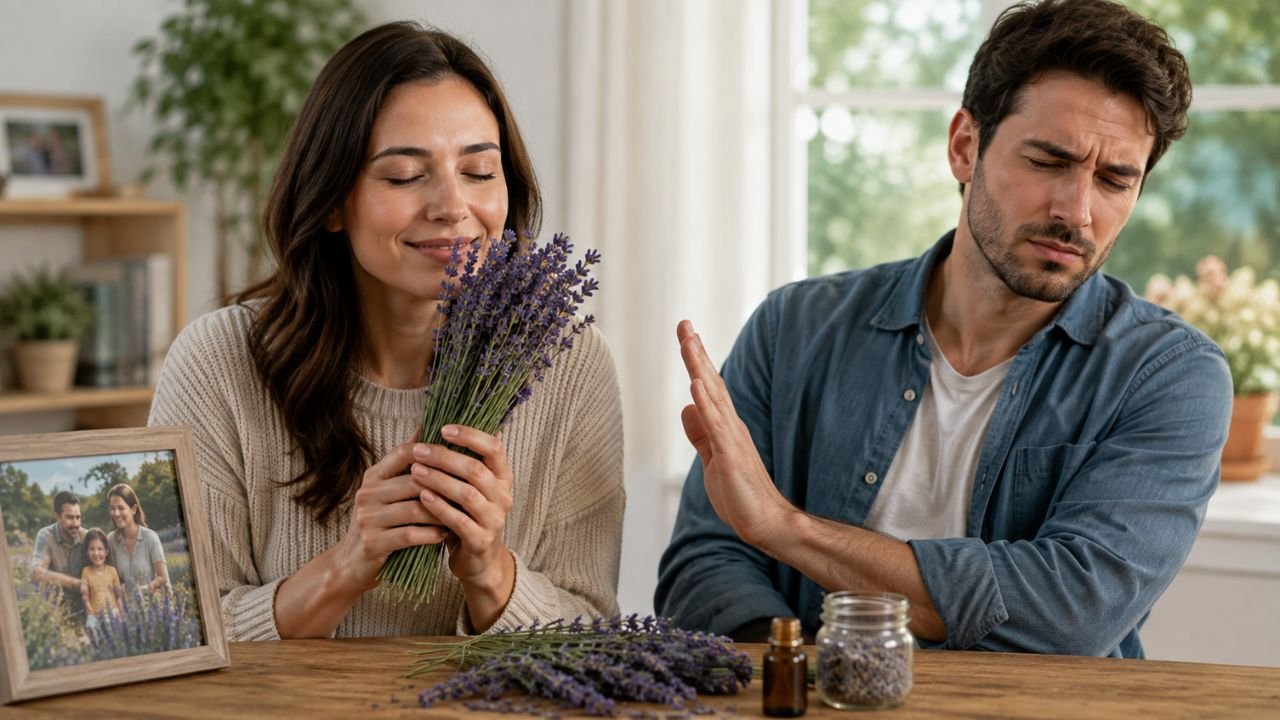
why smells affect people differently
Have you ever noticed how the smell of freshly baked bread can make one person smile while another barely notices it?
The same thing happens with lavender, jasmine, sandalwood, citrus and even familiar cooking aromas. A fragrance that feels comforting to one person may be irritating—or completely unremarkable—to someone else.
That’s not unusual. Our response to smell is shaped by more than the odor itself. Memories, personal experiences, expectations and individual sensitivity can all influence how we experience a scent.
Smell Has a Strong Connection to Memory and Emotion
Smell has a particularly interesting relationship with the brain.
When odor molecules enter the nose, specialized receptors detect them and send signals through the olfactory system. Smell information has strong connections with brain regions involved in emotion and memory, which helps explain why a particular fragrance can suddenly remind you of a person, place or moment from years ago.
Think about the smell of sunscreen.
For one person, it may bring back memories of childhood vacations. For someone else, it might remind them of a hospital or an unpleasant experience.
The fragrance is the same. The emotional association is different.
Research published in Frontiers in Psychology has examined the close relationship between odors, memories and emotions.
Your Memories Can Change How a Smell Feels
Personal experience is one of the biggest reasons people respond differently to fragrance.
Imagine someone who grew up around jasmine in a family garden. The smell might immediately feel warm and familiar.
Another person may associate jasmine with a stressful period in their life.
That means there isn’t one universal “relaxing smell” that works for everyone.
Lavender is often associated with relaxation. Citrus scents are commonly described as fresh or energizing. Sandalwood is frequently used in fragrance and traditional wellness practices.
But those descriptions don’t guarantee that you will experience them the same way.
Your own history matters.
Some People Are Simply More Sensitive to Smell
Individual differences in smell sensitivity can also change the experience.
One person might notice a faint perfume from across the room. Someone else may barely detect it.
For people who are particularly sensitive to strong odors, concentrated perfumes, essential oils, cleaning products or heavily scented candles can become unpleasant very quickly.
The environment matters, too.
A light fragrance in a large, well-ventilated room may feel pleasant. The same fragrance in a small closed room can become overwhelming.
That’s why moderation is usually a good approach.
If a scent feels too strong, you don’t need to “get used to it.” Open a window, move to a better-ventilated area or stop using the product.
Your Expectations Can Influence Your Response
Your brain doesn’t respond to sensory information in isolation.
What you expect to happen can influence how you experience something.
For example, if you regularly use a particular lavender scent as part of your bedtime routine, your brain may begin associating that smell with winding down.
Likewise, if you associate the smell of freshly brewed coffee with getting ready for work, that aroma may make you feel alert partly because of the learned association.
This doesn’t mean a scent can magically change your health.
It simply shows how closely our sensory experiences can become connected to routines, memories and expectations.
Why Aromatherapy Doesn’t Feel the Same for Everyone
Aromatherapy commonly involves essential oils and other aromatic plant extracts.
Some people enjoy incorporating scents into relaxation routines, baths, massage or other forms of self-care. However, aromatherapy should not be treated as a replacement for medical treatment.
There also isn’t one essential oil that everyone will find calming.
A scent that feels soothing to one person may cause discomfort in another.
If you enjoy aromatherapy, start with a small amount and pay attention to how your body responds.
A few sensible precautions
- Use essential oils according to appropriate safety instructions.
- Avoid applying concentrated essential oils directly to your skin unless they’re specifically intended and properly diluted for topical use.
- Keep essential oils away from the eyes.
- Use good ventilation with strong fragrances.
- Be particularly careful around children and pets.
- Stop using a product if it causes irritation or other symptoms.
People with allergies, asthma or fragrance sensitivity may need additional precautions.
Don’t Assume “Natural” Means Risk-Free
Essential oils come from plants, but “natural” doesn’t automatically mean harmless.
Concentrated oils can irritate the skin or cause other unwanted reactions in some people.
If you’re using an essential oil topically, appropriate dilution matters. If you have a medical condition, are pregnant, take medications or are unsure about safety, ask a qualified healthcare professional before using concentrated oils.
What If a Smell Suddenly Starts Bothering You?
A temporary dislike of a fragrance isn’t necessarily a sign of a medical problem.
But a new or persistent change in your sense of smell deserves attention, particularly if it occurs alongside other symptoms.
Changes in smell can have many possible causes, including infections, nasal problems, medications and certain neurological conditions.
Speak with a healthcare professional if you notice a significant or persistent change in your ability to smell or if familiar odors suddenly smell very different.
How to Find Scents That Work for You
You don’t need to follow a list of “best relaxing fragrances.”
Instead, pay attention to your own response.
Try this simple approach:
Start with scents you already enjoy.
Maybe it’s fresh citrus, vanilla, freshly washed linens, roses, coffee or the smell of rain.
Use less fragrance than you think you need.
A subtle scent can be easier to tolerate than a heavily scented room.
Give your nose a break.
Don’t continuously expose yourself to strong fragrances.
Ventilate your space.
Fresh airflow can make a noticeable difference when you’re using scented products.
Notice the association.
Ask yourself: What does this smell remind me of?
Sometimes the emotional reaction tells you as much about your personal history as it does about the fragrance itself.
The Same Smell Can Tell Two Different Stories
This is perhaps the most interesting part of our sense of smell.
A fragrance doesn’t arrive in the brain carrying a universal emotional label that says “relaxing,” “happy” or “annoying.”
Your brain interprets the experience in the context of your memories, expectations and individual sensory sensitivity.
That’s why your favorite perfume may be your friend’s least favorite smell.
Neither person is necessarily wrong.
You’re simply experiencing the same scent through different personal histories.
Final Thoughts
There is no need to force yourself to enjoy a fragrance simply because someone else calls it calming.
If lavender helps you unwind, enjoy it. If citrus makes your space feel fresh, use it. And if a particular perfume gives you a headache or makes you uncomfortable, there’s nothing wrong with avoiding it.
Your response to smell is personal.
The goal isn’t to find the scent that everyone says is “best.” It’s to understand what your own senses respond to—and use fragrance thoughtfully, safely and in moderation.
FAQs
1. Why does the same smell affect people differently?
People have different memories, emotional associations, expectations and levels of sensitivity. These factors can influence how the brain interprets an odor.
2. Can smells trigger memories?
Yes. Smell has strong connections with brain systems involved in memory and emotion, which can make certain odors surprisingly effective memory triggers.
3. Is lavender relaxing for everyone?
No. Lavender is commonly associated with relaxation, but individual responses vary. Some people may enjoy it while others may dislike the smell or find it irritating.
4. Can strong fragrances cause headaches?
Some people report headaches or other symptoms after exposure to strong fragrances. If a particular scent repeatedly causes symptoms, reducing exposure or avoiding it is reasonable. Persistent or severe symptoms should be discussed with a healthcare professional.
Medical Disclaimer: This article is for general educational purposes and is not a substitute for medical diagnosis, treatment, or personalized advice from a qualified healthcare professional. If a fragrance consistently causes headaches, breathing problems, skin irritation, nausea, or other symptoms, stop using it and speak with a healthcare professional.
Continue using AI Cursor?Keep it onTurn Off